


微博
Rare dragon-phoenix clay relics found in 4,300-year-old tomb in Inner Mongolia_我的网站

A |
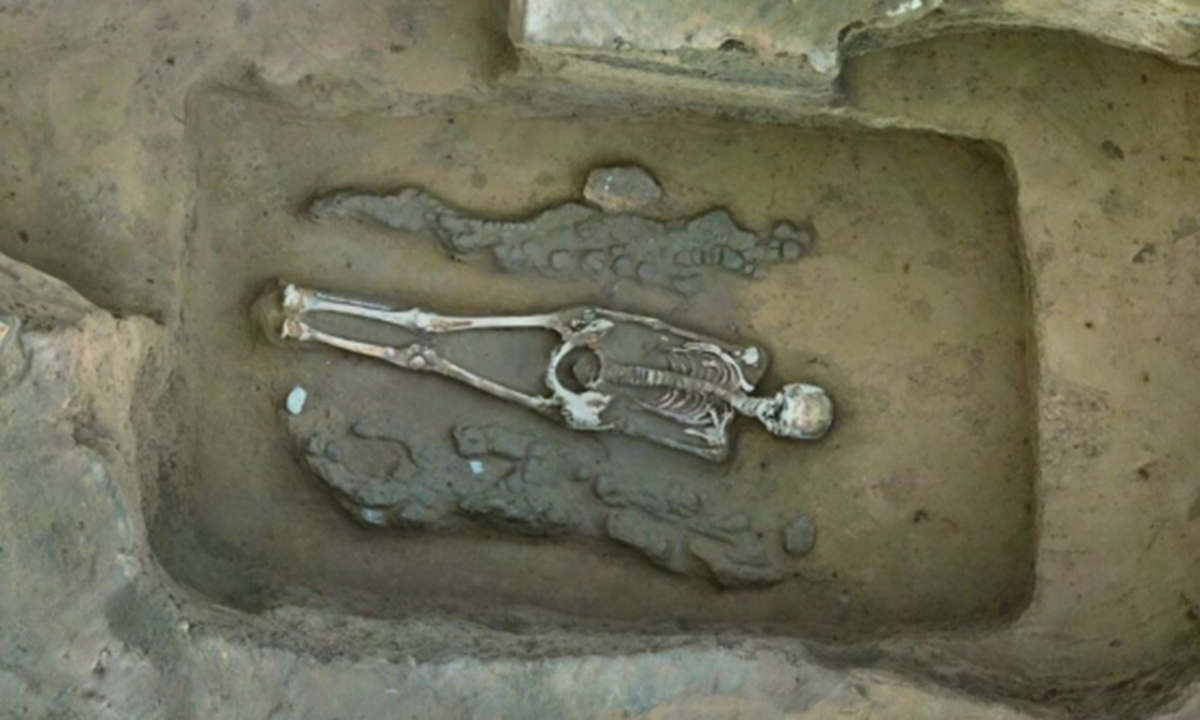
The two figurines were placed symmetrically on either side of a skeleton in a rectangular earth-pit tomb at the Zhaizita stone-walled site, a major Longshan culture settlement spanning 420,000 square meters in Inner Mongolia's Jungar Banner, Ordos City.
Radiocarbon dating places the burial at approximately 2300 BC, during the late Neolithic Longshan culture, per Xinhua.
Sun Jinsong, head of the Inner Mongolia Institute of Cultural Relics and Archaeology, told the Global Times that the tomb owner was buried lying face-up with limbs extended and head pointing northeast.
A turquoise-inlaid jade disc rested near the right side of the body's neck. The dragon-shaped clay piece was positioned on the right side of the body, aligned with the head, while the phoenix-shaped piece on the left was rendered as if soaring upward.
Stable isotope analysis of dental enamel collagen revealed a diet based on millet agriculture but with an unusually high intake of animal protein or special food resources.
"The findings indicate the tomb owner possessed prominent social status and privileged material resources during their lifetime," Sun said.
Sun emphasized the discovery rewrites the timeline of tangible dragon-phoenix symbolism in northern China.
"This is the earliest and most clearly defined dragon-phoenix combination found in northern China so far. It pushes back the materialized representation of dragon and phoenix to the Longshan era," Sun said. "The find provides precious material for studying the spiritual beliefs and funeral concepts of the Longshan people."
Sun added that the discovery underscores the unique contributions of the Hetao region - the great bend of the Yellow River - to early spiritual and cultural creativity in China, supporting the view that Chinese civilization developed through a pattern of unity in diversity.
According to media reports, the Longshan culture is renowned for advanced stone city construction, sophisticated handicraft techniques and mature ritual systems across the Yellow River basin.
Perched along the Yellow River basin, the Zhaizita stone-walled site ranks among the earliest known stone-enclosed fortress and ceremonial sites in northern China.
。

B | 7月17日,上海黄浦江畔,2026世界人工智能大会暨人工智能全球治理高级别会议开幕。1100余家企业集中参展亮相,超300款产品全球首发,规模与首发数量均创下历届之最。 同一天,纽约华尔街投资者却慌了。

C | 以科技股为主的纳斯达克100指数收盘下跌1.5%,创近一个月最差周度表现。

D | 费城半导体指数较6月高点回撤20.2%,进入技术性熊市。 上海一场会,美股跌了。华尔街的分析师们争论不休,但有一个名字被反复提及——Kimi K3。 它是月之暗面于大会开幕前夕发布的新一代开源模型,参数规模2.8万亿,当前全球参数体量最大。在编程能力盲测榜单上,它以1679分登顶。 在中国,这是一次技术突破,引爆了用户需求,火到算力紧缺,7月19日晚间月之暗面宣布暂停C端新用户订阅。 而在美国,它却成了恐慌源头。华尔街称之为“Kimi时刻”,对应去年的“DeepSeek时刻”。

E | 两次冲击,同一个逻辑:当中国开源模型以极低成本逼近甚至超越美国旗舰产品时,过去支撑华尔街万亿美元估值的算力竞赛逻辑,正在被重估。 慌的不止华尔街。7月15日,美联储主席凯文·沃什上任后首次赴国会作证,矛头直指中国AI。他把中美AI竞争描述为“代理人战争”,将中国定义为“步步紧逼的竞争者”。

F | 从资本市场波动,到政府官员喊话,美国坐不住了。 剥开表象,美国这种恐慌,或源于三重失控。 首当其冲的,是技术霸权的松动。 目前,中国手握全球60%的AI专利。工业和信息化部最新数据显示,今年上半年,规模以上制造业企业AI技术应用普及率超30%,开源大模型全球累计下载量突破100亿次。 专利数量、产业渗透、用户覆盖,多个指标同步验证,说明这场赶超早已走出实验室层面。

G | 正因如此,Siebert Financial首席投资官马克·马莱克直言,“无论中美前沿AI之间曾存在多大差距,现在都已大幅缩小。” 技术差距缩小,改变的是市场逻辑。

H | 美国企业在AI基础设施上砸了数万亿美元,如果中国模型提供可行的替代方案,这些投资还值多少? 高盛合伙人、股票业务负责人Rich Privorotsky警告,算力扩张时代或已走到尽头。 再深一层看,是市场垄断的瓦解。

I | 长期以来,美国通过限制GPU出口、封闭模型、限制访问等单边主义措施,试图固化垄断,使发展中国家沦为“黑箱AI”的被动消费者。 而中国模型不仅技术过硬,更极具性价比,提供了优选项。以Kimi K3为例,在多项公开编程及智能体基准测试中,它超越OpenAI和Anthropic旗舰产品,成本却较同类美国顶级模型低约40%。

J | 市场用脚投票。在主流模型聚合平台OpenRouter上,中国大模型周调用量已连续十一周超过美国并稳居全球首位。工业和信息化部数据显示,受全球AI需求推动,上半年,以人民币计价的集成电路、电子元件等产品出口额同比分别增长88.7%、62.6%。

K | 更深层次的恐慌,是规则制定权的旁落。 面对技术变革的十字路口,中美给出的治理方案截然不同。 美国将AI技术泛化为地缘博弈工具,甚至不惜将前沿模型卷入地缘冲突的军事化应用。 中国则走了另一条路。从提出《全球人工智能治理倡议》到推出《人工智能全球治理行动计划》,从发起“人工智能+”国际合作倡议到实施《人工智能能力建设普惠计划》以及倡议成立世界人工智能合作组织,中国以开放姿态推动全球AI走向合作共享。

L | 正如国家发展改革委创新驱动发展中心主任霍福鹏在接受三里河采访时表示,中国始终是强化全球人工智能治理合作的坚定支持者。 中国在搭桥,美国在拆台;中国强调以人为本,美国高喊利益优先;中国开放共享,美国升级封锁;中国提供机遇清单,美国输出技术霸权。 美国越焦虑,越说明中国这条路走对了。就连美国企业都在用脚投票。相关研究显示,80%的美国AI初创公司都在用中国的开源模型做推理和微调。 事实证明,在这场关乎人类未来的技术演进中,抱守小院高墙没有出路,唯有全球加强合作、共享普惠,才能真正赢得下一个时代。 |总策划:俞岚 |策划:周锐 |统筹:王庆凯 程春雨 |执笔:左登基 |责编:李金磊 |校对:黄蕾 |“三里河”工作室出品。
Current article:http://86rtj7.ninyakenhongnian.sbs/list_tl25/68a.html
Published on:11:03:55